.jpg)
TL;DR
Suriname confirmed H5 avian influenza on a Paramaribo-area poultry farm in September 2026, after nearly 5,000 of about 6,000 broilers died. Guyana tightened surveillance, and Barbados stepped up port checks on 2 October. AI cannot replace the laboratory that types the virus, but it can read a farm's daily death count and flag a bad day sooner than a person scanning a notebook. A study of Dutch laying hens found alert rules that signalled infection two to six days earlier. A poultry farmer can start a 14-day mortality log today and set a first alert rule by 19 October.
What happened
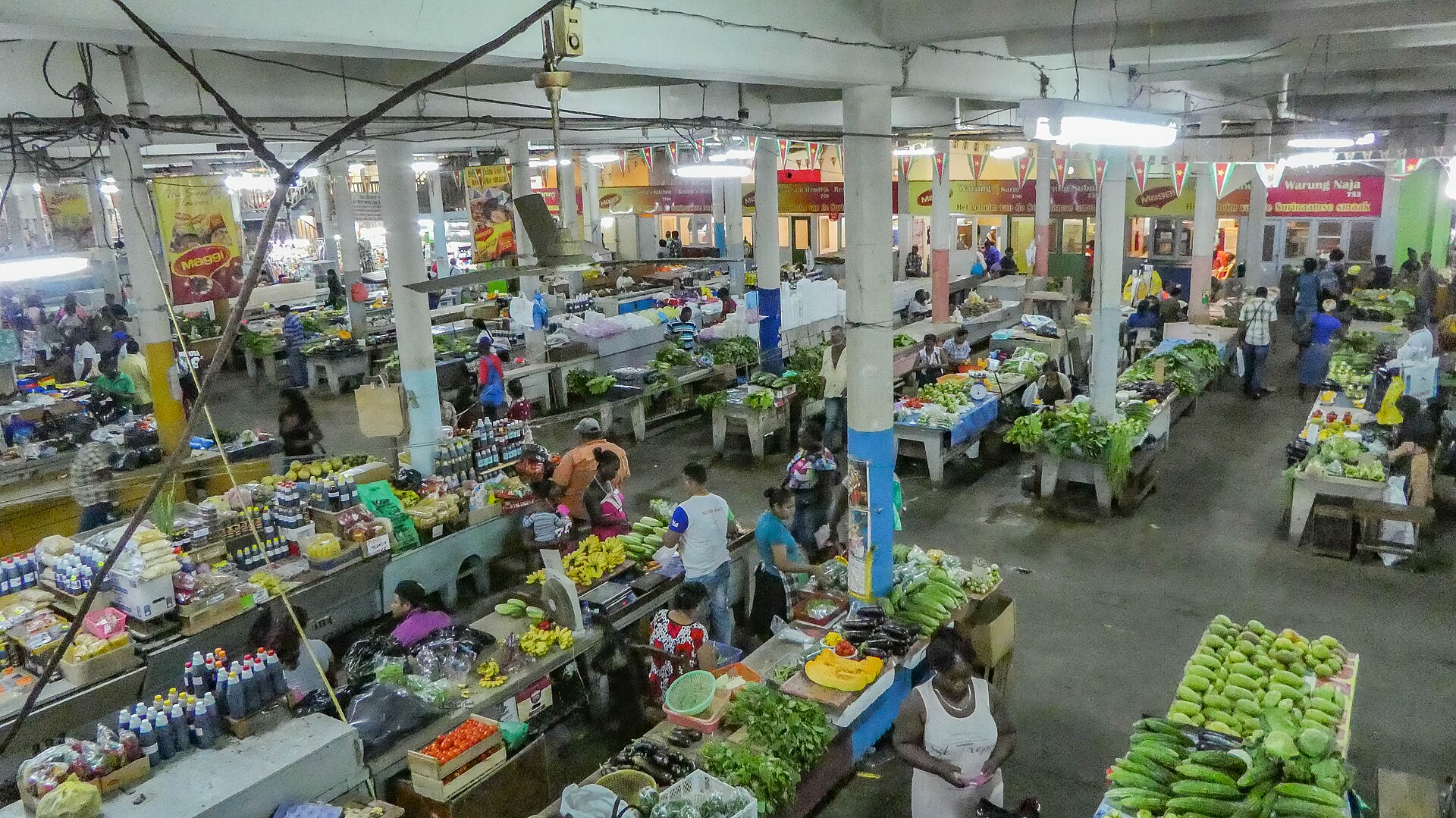
On 17 September, officials in Suriname sampled sick birds on a broiler farm in the Paramaribo area after unusually high mortality. The next day the public health bureau, the Bureau voor Openbare Gezondheidszorg (BOG), confirmed avian influenza. Key News Suriname reported on 25 September that the farm held about 6,000 broilers and that nearly 5,000 died. The remaining birds were culled, contact locations were identified, culled and disinfected, and officials went door to door near the farm.
People who were exposed have been tested. Those tested so far were negative and remain under monitoring, along with field staff from the agriculture ministry. Stephanie Cheuk-Alam, the BOG's acting director, said "avian influenza can be transmitted from infected animals to humans under certain circumstances." Samples are going to a foreign laboratory, with support from the Pan American Health Organization (PAHO), for typing and genetic testing. Until that result arrives, nobody can say whether the virus is the highly pathogenic form or a low-pathogenic one.
The neighbours reacted within days. INews Guyana reported that Agriculture Minister Zulfikar Mustapha has set up a multi-stakeholder body to watch the situation, with tighter border quarantine, a hotline for poultry farmers and more inspections through the Guyana Livestock Development Authority. On Friday 2 October, Barbados Today reported that Chief Veterinary Officer Dr Mark Trotman said port surveillance had been strengthened. His words: "We haven't put anything specific in place right now for Suriname, other than our normal quarantine protocols."
Dr Trotman located the weak point at the ports of entry, not in the shops, and described it as "the possibility of people sneaking it in or bringing it in their baggage". His message to farmers was short: "Maintain vigilance, maintain your biosecurity measures at your farms."
The numbers
Start with the region. PAHO's update of 27 August 2026 counts 455 avian influenza A(H5) outbreaks in animals across 10 countries of the Americas between January and 15 July: 386 in birds and 69 in mammals. That is 25.7% fewer than the 612 in the same period of 2025. The report records no human A(H5) cases in the Americas in 2026 up to August, after 75 human infections in five countries (Canada, Chile, Ecuador, Mexico and the United States) from 2022 to the end of 2025. Globally, 1,002 laboratory-confirmed human A(H5N1) cases with 479 deaths have been reported since 2003. So the trend in the Americas is down, and Suriname's farm shows that a falling count elsewhere gives no protection to a flock in Wanica.
Now the farm. About 5,000 deaths among about 6,000 birds is roughly five in six, our arithmetic from two approximate figures. Sampling happened on 17 September, after the mortality had been noticed as unusual, and the public reports do not say how many days of rising deaths came before that. That missing number is the one a detection system would shorten.
The evidence on shortening it comes from the Netherlands. In a 2018 paper in Scientific Reports, Jose Gonzales and Armin Elbers examined commercial laying-hen flocks: 7 infected with H5N8 highly pathogenic virus (2014 to 2016) and 8 with low-pathogenic virus (2013 to 2017), plus data from 110 H7N7 flocks in the 2003 epidemic. Their new thresholds, set from 30 healthy Dutch layer farms, were more than 0.08% daily mortality for indoor flocks, more than 0.13% for flocks with outdoor access, and a mortality 2.9 times the previous week's average. An alarm sounded only when a threshold was exceeded on two consecutive days. Compared with the thresholds then in use, the new ones signalled infection two to six days earlier: on average about two days earlier for the highly pathogenic virus and a median of six to seven days earlier for the low-pathogenic one. The older fixed 0.25% and 0.5% thresholds, applied as recommended, detected 3 of the 7 highly pathogenic outbreaks. The new rules alarmed on 5 of 7 (71%), and for the low-pathogenic virus mortality thresholds had a sensitivity of 66.7% to 89.0%, depending on the method. The authors say records kept by farmers are sometimes inaccurate, especially at weekends, and that only a few outbreaks were available to test sensitivity.
Sensors point the same way but are earlier in their evidence. In an April 2025 study in the journal Animals, Alireza Ansarimovahed and colleagues infected 80 Ross 308 broilers in four groups of 20 with avian influenza or Newcastle disease and photographed them with a thermal camera every 8 hours. A model reading images of the head and legs reached 92.48% accuracy for avian influenza, and above 90% within 8 hours of infection. The birds sat in individual pens in a laboratory. The authors note that birds raise their body temperature through social interaction and that feathers affect readings, so the result may not hold in a crowded commercial house.
Last, the stake for households. Guyana's Department of Public Information reported in 2019 that chicken is the main meat there, about 40 kg per person a year and roughly 70% of all meat consumed. We found no newer official figure, so treat it as dated.
.jpg)
What this means in Suriname, Guyana and Barbados
We apply the method Adrian Dunkley calls People First, Problem Second, AI Last. A test we suggest is to write the human need and the problem in two sentences each with no mention of AI. The need: a family in Wanica, Georgetown or St Michael has to be able to buy chicken at a steady price, and the farmer who raises it has to keep a livelihood. The problem: a flock can pass from healthy to nearly wiped out before anyone with authority sees a number, and the person who first sees it is a farmer with a notebook, a phone and a hundred other jobs that day.
Neither sentence needs the word AI. The need is food and income. The problem is a late signal and a slow path from the farmer to the vet. AI comes last, as the tool that reads the signal and shortens the path.
The place is Suriname, and the lesson travels along the Guiana coast. Suriname's response shows what works already: quick sampling, quick confirmation, culling, door-to-door checks, monitored contacts and a published report line, 8938970, for sick or dead birds. Guyana's hotline and Barbados's quarantine permits play the same role. What none of them describes in public is a shared daily mortality feed from farms to the veterinary authority. We found no published account of one in any of the three countries, so we cannot say it does not exist. If it does not, a Paramaribo farmer's death count reaches the ministry only when the farmer decides it is serious.
Barbados has a different problem. Dr Trotman's own account puts the exposure at informal channels, meaning meat in a suitcase, not at the commercial trade that the permit system covers. AI could help sort a flight's passengers by risk. That is our inference. We found no Barbadian evidence that such a system exists or has been tested, and risk-scoring people raises its own fairness questions, covered below.
Start with the notebook
The cheapest AI in this story is a rule applied to a number the farmer already has. The Dutch thresholds are arithmetic: compare today's deaths with last week's average, and compare the daily death rate with a fixed line. A spreadsheet does this. A language model can help a farmer set the spreadsheet up, or read a photographed notebook page into rows. The arithmetic itself should stay in the spreadsheet, because a language model can state a wrong total in a calm voice.
Here is what the numbers mean on a house like the one in Paramaribo. On 6,000 birds, 0.08% a day is about five birds, and 0.13% is about eight. Those are layer thresholds, our calculation, and they should not be copied onto broilers without a baseline. INews Guyana says modern tunnel-ventilated houses being developed there can bring broilers to market weight in five to six weeks, and a broiler flock's normal deaths rise and fall across a life that short. The thing to measure is each house's own normal, then the departure from it.
A second step adds a signal that costs a phone call. When a farm hits an alert level, the farmer sends a message to the vet or the veterinary authority with the date, house number, bird count and deaths. An assistant can draft that message in Dutch, Sranan Tongo, English or Guyanese Creole and Bajan, whichever the reader prefers. Test it in the language the farm uses, because a message nobody understands saves no time.
Sensors come third and last. Thermal cameras and microphones have laboratory results behind them, as above, and they need a commercial trial in a Caribbean house before a farmer pays for them. The Agent Colonialism idea applies here: a system built and trained on foreign farms, sold to a Caribbean farm without accuracy figures from a Caribbean house, leaves the farmer carrying the errors. Ask the vendor for the number before signing.
Watching people as well as birds
The BOG is monitoring exposed people. PAHO advises watching exposed individuals for 14 days after contact, and recommends extra surveillance of poultry workers, veterinarians and laboratory staff. That is a lot of check-ins for a small public health team. An automated text-message check, asking each exposed worker each morning about fever and cough, with an answer that goes straight to a nurse's dashboard, is a task a simple script can run. The script contacts people. A nurse decides what a symptom means.
The same applies to the farm's closure. Suriname keeps the infected farm and contact locations closed for 28 days after the material is cleared and neutralised. A calendar tool that tracks each location's reopening date, and reminds an inspector to visit before it, is plain software. It only works if the list lives somewhere other than one inspector's head.
What to do this week
These steps are written for a poultry farmer or farm manager in Suriname, Guyana or Barbados. The thresholds in step two come from Dutch laying hens and are a test we suggest, not a method Adrian has published.
- Start a daily log today, 5 October. For each house, write the date, birds housed, birds found dead and the time you counted. A paper notebook works. Keep it for 14 days, to 19 October, to learn each house's normal daily deaths.
- Set a first alert on 19 October. Compute the 7-day average of deaths, and mark any two days in a row that are 2.9 times the previous week's average, or that cross a line you set from your own baseline. Do not copy the Dutch 0.08% or 0.13% onto broilers without checking them against your 14 days.
- Test the path to the vet. Write down the phone number of your veterinary authority (Suriname's published line is 8938970). By 26 October, run one drill: from a made-up alert, send the message and time how long it takes to reach a person who can act. Your target is under two hours. If it takes longer, fix the path before you buy any technology.
- Check your biosecurity list. Barbados's chief veterinary officer asked farms to maintain their measures, so write down who enters each house, whether footwear and vehicles are cleaned, and who handles dead birds. Finish by 12 October.
- If you are a consumer, buy from sellers who can tell you where the birds came from, cook poultry and eggs thoroughly, and report sick or dead wild or backyard birds to the authority instead of handling them.
Where this can go wrong
A false alarm costs money. If an alert rule is too sensitive, a farmer could call the vet over a hot week that raised deaths for ordinary reasons, and a small grower who gets a reputation for crying wolf may stop reporting. The Dutch study reported specificity of 97% to 100% only when mortality and egg production rules were combined, and broiler houses have no egg count to combine with. The guardrail is to log the reason for every alert, so the rule can be tuned from real cases.
A missed alarm costs more. A farmer who trusts a green light might wait. The Dutch rules still missed some infected flocks, with sensitivity as low as 66.7% for the low-pathogenic virus. The guardrail is a standing rule that a bird that looks sick is reported whatever the screen says.
Farm data can leak or be used against the grower. A vendor holding a farm's mortality and movement records could sell it, or a regulator could use it to punish reporting. Small growers, who have the least say in a contract, would bear that. The guardrails are a written rule that the data is used for disease reporting and nothing else, and a vendor question about where the data is stored. Under the idea Adrian Dunkley calls Extracted Intelligence, a farm's data leaves as raw material and returns as a product the farmer must buy, so ask what the farmer gets back.
Risk-scoring travellers at ports could single out particular nationalities or families. The guardrail is to score the goods and the declared items, not the person's origin, and to publish the rules.
The weakest part of this argument
We do not know how many days of rising deaths came before the sampling on 17 September, so we cannot say an alert would have saved this flock. The virus type was still unconfirmed in the reports we read, and the outbreak may stay on one farm. The evidence for early alerts comes from Dutch laying hens, and the sensor evidence from 80 birds in a laboratory. We found no Caribbean trial of either. And a rule that signals two to six days sooner does nothing unless a vet answers the call. Where veterinary staff are stretched, the response, not the detection, may be the bottleneck.
Questions readers ask
Can people catch bird flu from eating chicken or eggs in the Caribbean?
Suriname's public health bureau, citing the Pan American Health Organization, says there is no evidence of transmission through properly cooked poultry meat and eggs. Infections reported worldwide mostly follow direct or indirect contact with infected animals or contaminated surroundings, so the people most exposed are farm workers, vets and market handlers.
How long did Suriname keep the affected farm closed, and how long are exposed people watched?
Suriname's Bureau voor Openbare Gezondheidszorg said the infected farm and the contact locations stay closed for 28 days after the material is cleared and neutralised. People who were exposed are monitored, and the Pan American Health Organization advises watching exposed individuals for 14 days after contact.
Why did Barbados not ban poultry from Suriname?
Chief Veterinary Officer Dr Mark Trotman said Barbados only allows poultry and meat from approved countries under a permit system and does not trade with Suriname on any meaningful scale. He said the weak point is illegal importation, such as meat carried in baggage, which is why port checks were tightened.
How did Caribbean governments agree to respond to avian influenza before this outbreak?
In January 2025 the Committee of CARICOM Chief Veterinary Officers advised member states to update national emergency plans, intensify surveillance and early detection, share diagnostic data, curb live animal imports and use a One Health approach linking animal and public health agencies. Migratory wild birds are the most common route of entry.
Do mortality alerts work when the flock is broilers, not laying hens?
We found no study that shows it. The Dutch alert thresholds of more than 0.08% daily mortality indoors and 0.13% outdoors were built on laying hens. Broilers in modern houses reach market weight in five to six weeks and have a different normal death rate, so a farmer should log the flock's own baseline for 14 days before trusting any fixed alert level.
Is Guyana's poultry sector large enough to worry about this?
Yes. Guyana's Department of Public Information reported in 2019 that chicken is the main meat, at about 40 kg per person a year and roughly 70% of all meat eaten. That older figure is the one we found, so a current consumption survey would sharpen the picture of how much a sector-wide outbreak would hurt households.
Supported by StarApple AI, the Caribbean's first AI company. Read more at StarApple AI, AI Boss and the Caribbean AI Risk Management Council. Related reading: AI and Caribbean food security and Jamaica's pig farmers and the slaughterhouse crisis.