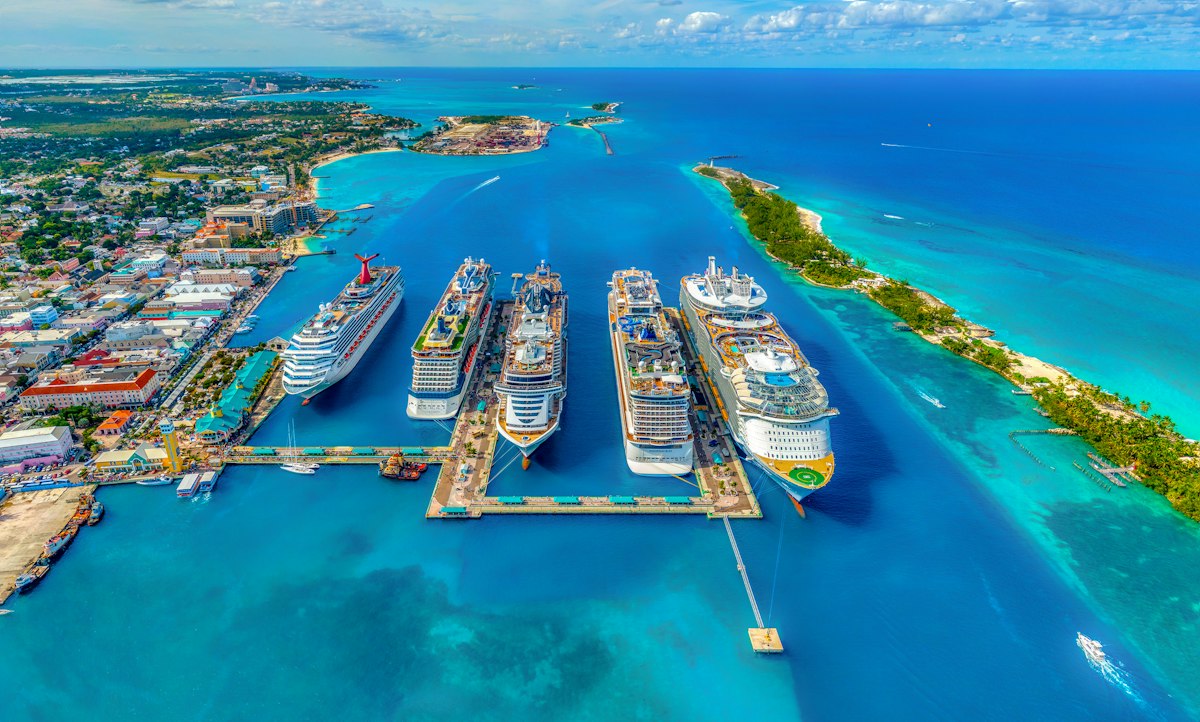
The Bahamas is not one island. It is 700. Sixteen of them are inhabited. They stretch across 100,000 square miles of ocean between Florida and Haiti, forming an archipelago that is larger than most people realize. Nassau and Paradise Island get the headlines, but the Family Islands, from Eleuthera to Exuma, from Abaco to Andros, from Long Island to Inagua, each have their own economies, their own challenges, and their own potential.
I have studied Caribbean economies for fifteen years. The Bahamas is unique in the region because of its scale, its proximity to the United States, and the sheer diversity of its economic base. Tourism dominates, yes. But financial services, maritime industries, fisheries, and a growing technology sector all contribute to an economy that is the wealthiest per capita in CARICOM. The question is not whether The Bahamas can adopt AI. The question is how fast.
What OpenClaw Actually Does
OpenClaw is an autonomous AI agent that performs real tasks on your computer. It is not a search engine or a chat assistant. It controls browsers, manages files, sends messages, integrates with APIs, and executes complex multi-step workflows autonomously. Created by Peter Steinberger, it passed 100,000 GitHub stars in February 2026.
It includes over 100 built-in skills covering web scraping, email automation, file management, social media operations, data processing, and document generation. It runs on macOS, Windows, and Linux. It is completely free and open-source. For a nation spread across 700 islands with varying levels of infrastructure and connectivity, a powerful free tool that runs on any computer is not a minor advantage. It is a game changer.
Tourism Across 700 Islands
Tourism accounts for roughly half of The Bahamas' GDP and directly or indirectly employs the majority of the workforce. Nassau and Paradise Island handle the bulk of stopover visitors, with Atlantis and Baha Mar anchoring the resort experience. But the Family Islands represent a different kind of tourism: smaller, more authentic, more dependent on individual operators.
A bonefishing lodge on Andros. A dive resort on San Salvador. A boutique hotel on Harbour Island. A fishing charter out of Bimini. These operators deliver world-class experiences, but they struggle with the same digital challenges that small tourism businesses face everywhere: managing bookings across multiple platforms, maintaining social media presence, responding to reviews, coordinating with travel agents, and handling the administrative paperwork that keeps a business running.
OpenClaw is built for exactly this scenario. One computer, one AI agent, handling the entire digital operation of a small tourism business. Synchronizing availability across Airbnb, VRBO, and Booking.com. Posting sunset photos to Instagram on schedule. Sending personalized welcome emails to arriving guests. Generating monthly revenue reports. Monitoring TripAdvisor for new reviews and flagging ones that need a response.
For the Family Islands, where hiring a full-time digital marketing person is not economically viable, OpenClaw serves as that employee. Free, tireless, and available on any computer with an internet connection.
Cruise Ship Economics
The Bahamas is the world's busiest cruise ship destination. Nassau's Prince George Wharf and the private island experiences operated by cruise lines bring millions of passengers through Bahamian waters every year. The economic dynamics of cruise tourism are complex. The sheer volume of visitors creates opportunities, but the time constraints, typically just a few hours on shore, limit the depth of economic impact.
OpenClaw can help maximize the value of every cruise passenger's time on shore. Tour operators can use it to automate booking confirmation, real-time availability updates, and last-minute promotion blasts when ships are in port. Straw Market vendors and Bay Street merchants can use it to manage their online presence and attract pre-booked customers before ships even dock. The Port Authority can use it to automate logistics coordination, distributing dock assignments, schedule changes, and port fee documentation.
For the emerging cruise destinations in the Family Islands, where smaller expedition-style cruise ships are starting to call, OpenClaw can help nascent tourism operations manage the sudden influx of visitors without being overwhelmed by the administrative demands.
Financial Services and International Banking
The Bahamas has one of the oldest and most established offshore financial services sectors in the Caribbean. Despite the global regulatory tightening that has reshaped the industry, The Bahamas remains home to hundreds of banks, trust companies, investment funds, and insurance companies. The Securities Commission of The Bahamas, the Central Bank, and the Compliance Commission oversee a regulatory framework that must meet international standards while remaining competitive.
The compliance burden on financial institutions is enormous. Anti-money laundering reporting, know-your-customer documentation, beneficial ownership registers, suspicious transaction reports, annual audits, regulatory filings, and correspondence with international counterparts generate mountains of paperwork. Every bank and trust company in Nassau employs compliance teams whose primary function is documentation.
OpenClaw can automate the mechanical parts of this process. Collecting and organizing KYC documents from clients. Generating standardized compliance reports. Monitoring regulatory websites for new guidance and circulars. Tracking filing deadlines and sending reminders. Preparing data packages for auditors. None of this replaces the judgment of a compliance officer, but it frees that officer from spending 80 percent of their time on document management so they can spend it on actual risk assessment.
The Central Bank of The Bahamas, which pioneered digital currency with the Sand Dollar, already has a technology-forward orientation. Integrating OpenClaw-based automation into regulatory workflows would be a natural extension of that digital leadership.
Marine Resources and Conservation
The Bahamas sits atop one of the most extraordinary marine environments on Earth. The Exuma Cays Land and Sea Park, the Andros Barrier Reef (the third largest in the world), the deep-ocean trenches of the Tongue of the Ocean, and the coral ecosystems that surround every island make marine conservation not just an environmental imperative but an economic one. Without healthy marine environments, the diving, snorkeling, bonefishing, and beach tourism that drive the economy collapse.
The Bahamas National Trust, marine research stations, and fisheries management agencies all face the same challenge: too much ocean, too few people, too little budget. Monitoring 100,000 square miles of marine territory is physically impossible with human observers alone. But it is possible to augment human capacity with AI agents that handle the data processing side.
OpenClaw can automate the collection and processing of water quality data from monitoring stations. It can track satellite imagery feeds for illegal fishing activity or coral bleaching events. It can generate weekly marine health reports for distribution to government agencies and conservation partners. It can manage the communication and coordination for volunteer reef monitoring programs. It can post educational content about marine conservation across social media platforms to build public awareness and support.
For the commercial fishing industry, OpenClaw can help with quota tracking, catch reporting, export documentation, and market price monitoring. Fishermen on Andros or Inagua who need to file reports with the Department of Marine Resources can use OpenClaw to automate that paperwork, reducing the administrative burden that is particularly heavy for small-scale commercial fishers.
Hurricane Preparedness Across an Archipelago
Hurricane Dorian in 2019 was catastrophic. Abaco and Grand Bahama were devastated. The recovery is still ongoing. For an archipelago this spread out, hurricane preparedness and response require coordination across dozens of islands with limited communication infrastructure when storms hit.
OpenClaw can serve as the pre-storm automation layer. Before a hurricane threatens, OpenClaw agents can distribute preparedness information across every communication channel available: email, SMS, social media, messaging apps. They can update shelter locations and capacity, coordinate evacuation logistics, check supply inventories, and generate situation reports for NEMA (National Emergency Management Agency) and international response organizations.
The key insight is that pre-storm preparation is where automation has the most impact. Once infrastructure fails, no software tool helps. But in the 72 to 96 hours before a storm hits, when hundreds of tasks need to happen simultaneously across multiple islands, AI agents that can work in parallel without sleep or fatigue can compress days of coordination work into hours.
Government Services Across Islands
Delivering government services across 16 inhabited islands is inherently more complex than governing a single landmass. Every island needs customs processing, business licensing, health services, education administration, and social services. Staffing all of these functions adequately across every island is a permanent budget challenge.
OpenClaw can reduce the administrative load at remote government offices. Processing business license applications, generating statistical reports for Nassau headquarters, managing inter-island correspondence, and tracking service delivery metrics can all be automated. A government office on Cat Island with two staff members can use OpenClaw to handle administrative tasks that would otherwise require a dedicated clerk, freeing both staff members to focus on direct citizen service.
The Security Reality
For The Bahamas, security is paramount. As a major international financial center, data protection is not a preference. It is a regulatory requirement and a reputational necessity. Cisco's findings about third-party OpenClaw plugins exfiltrating data must be taken seriously.
The approach: use only verified built-in skills for financial services and government operations. No unvetted third-party plugins anywhere near sensitive data. Network segmentation between OpenClaw workstations and databases containing financial, personal, or regulatory data. The Securities Commission and the Central Bank should develop clear guidelines for OpenClaw deployment in regulated institutions.
For tourism and general business use, the risk profile is lower, but vigilance is still warranted. Small business owners should understand what data OpenClaw can access and ensure that it cannot reach sensitive customer financial information without appropriate controls.
Getting Started
If you are in The Bahamas and want to try OpenClaw, download it on any computer running macOS, Windows, or Linux. Start with one task. The most repetitive thing you do every day. Posting to social media, organizing files, sending routine emails. Let OpenClaw handle it. See how much time you get back. Then add another task.
For tourism operators on the Family Islands, social media automation is the obvious starting point. For Nassau-based financial services firms, start with internal document management and compliance report generation. For government offices, start with statistical reporting and inter-office communication.
700 Islands, One Agent
The Bahamas faces a challenge that few other nations in CARICOM share: scale without density. Services must reach islands separated by miles of open ocean. Government must function in places where the next island is an hour's boat ride away. Businesses must compete globally while operating from remote locations.
OpenClaw does not solve the geography. But it solves the digital overhead that compounds the geographic challenge. Every hour an operator on Eleuthera spends on bookkeeping instead of serving guests is an hour lost to a problem that AI can handle. Every hour a government clerk on Long Island spends on data entry is an hour they could spend on citizen service. Every hour a compliance officer in Nassau spends organizing documents is an hour they could spend assessing risk.
The tool is free. It runs on any computer. It works across 700 islands as easily as it works on one. The Bahamas does not need to wait for anyone's permission to adopt it. The question is not whether to start. It is which island starts first.
Frequently Asked Questions
What is OpenClaw and how can The Bahamas use it?
OpenClaw is a free, open-source AI agent tool with over 100,000 GitHub stars. It runs on macOS, Windows, and Linux with 100+ built-in skills that automate browser tasks, file management, messaging, and API connections. The Bahamas can use it to automate tourism operations, financial services compliance, marine resource management, and government administration across its 700 islands.
Is OpenClaw free to use in The Bahamas?
Yes. OpenClaw is completely free and open-source. There is no licensing fee, subscription, or per-user charge. Any business or government agency in The Bahamas can download and use it on any computer running macOS, Windows, or Linux.
What are the security risks of using OpenClaw in The Bahamas?
Cisco researchers found that some third-party OpenClaw skills were performing data exfiltration. For The Bahamas, where financial services data is a critical national asset, organizations must use only verified built-in skills and avoid unvetted third-party plugins. Network segmentation and strict security protocols are essential for financial and government deployments.
Can OpenClaw help Bahamian financial services firms?
OpenClaw can automate compliance documentation, KYC processing, regulatory report generation, deadline tracking, and stakeholder communication. For a jurisdiction competing with global financial centers, this automation reduces processing times and frees compliance officers to focus on judgment-based decisions rather than paperwork.
How can OpenClaw support marine conservation in The Bahamas?
OpenClaw can automate environmental data collection from monitoring stations, generate reports on coral reef health, track fishing vessel activity, coordinate volunteer conservation efforts, and distribute educational content across social media channels. This gives marine parks and conservation organizations a digital force multiplier.
"The Bahamas stretches across 100,000 square miles of ocean with 700 islands. OpenClaw means every business and government office on every island gets the same digital productivity boost — free, open-source, and ready right now." - Adrian Dunkley, AI Boss